Bridging the Gap to Chiplet Interoperability

The move to multi-die integration brings both promise and complexity. Scalable interconnects and automation are emerging as key enablers of future designs.
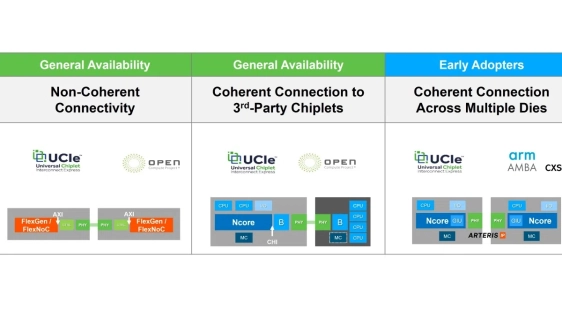 Chiplets have emerged as a dominant theme in discussions of next-generation system architectures. The current narrative describes a vision where design teams can mix and match dies from different sources, using standard interfaces and simplified flows to build multi-die systems.
The analogy to off-the-shelf IP components is often cited, with chiplets expected to become as accessible and interoperable as passives or even microcontrollers. However, while compelling, this narrative is still a long way from reality.
The Current Landscape of Chiplet Integration
Chiplets typically fall into two architectural categories: homogeneous scale-out and heterogeneous disaggregation. Homogeneous designs use multiple identical dies within a package to expand performance capacity, while heterogeneous approaches combine functionally distinct dies tailored to specific roles.
To read the full article on Electronic Design, click here.
Related Chiplet
- DPIQ Tx PICs
- IMDD Tx PICs
- Near-Packaged Optics (NPO) Chiplet Solution
- High Performance Droplet
- Interconnect Chiplet
Related Blogs
- UMI: Extending Chiplet Interconnect Standards To Deal With The Memory Wall
- Embracing the Chiplet Journey: The Shift to Chiplet-Based Architectures
- Introduction to Chiplets: Why the Industry is Moving Beyond Monolithic Designs
- Automotive chiplets: The path towards modularity, improved cost structures and supply resilience
Latest Blogs
- Addressing AI and Advanced Packaging Challenges with Synopsys 3DIO PHY
- Ultra-high repeatability and ultra-low insertion loss wafer and die-level visible-range E-PIC device characterization using an MPI Corp. probe system, enabled by process optimization from Quantum Transistors
- The Changing ASICs Landscape: the Shift Toward Chip Disaggregation
- Topology and Data Movement in Multi-Die Design
- How to Streamline Your Advanced Package (Chiplet, 3DIC) Interconnect Designs