Bosch and the chiplet revolution: Enabling software-defined mobility

The shift to software-defined mobility demands an unprecedented level of computational power, flexibility, and scalability as OEMs seek to develop software-based approaches to vehicle functionality and user experience.
While powerful, traditional System-on-Chips (SoCs) are reaching their technical limits in this evolving landscape. The sheer complexity of integrating multiple functions onto a single chip is becoming increasingly challenging – making development cycles longer, increasing costs, and reducing flexibility for future upgrades.
"At Bosch, we see chiplet technology not only as technical innovation, but also as a potential breakthrough for software-defined mobility." Michael Budde, President of Bosch Mobility Electronics
Chiplets: A modular solution for software-defined vehicles
With modular components that can be perfectly tailored for specific automotive applications, chiplets are emerging as a game-changer that can replace large, inflexible semiconductors. However, without common standards, the true benefits of chiplets cannot be fully realized as they risk remaining locked behind proprietary silos.
At Bosch, we’ve recognized that pursuing an open ecosystem for chiplet technology is critical for the advancement of software-defined mobility. This is reflected in our active involvement in several collaborative initiatives with major actors from industry and research.
Building an open ecosystem for automotive chiplets

The CHASSIS initiative unites major players from Europe's automotive, semiconductor, and software industries with prominent research entities.
Most recently, Bosch has taken a leading role in the CHASSIS initiative – which stands for Chiplet-based Architectures for Software-Defined Vehicles. With funding from the European CHIPS Joint Undertaking (CHIPS JU), the three-year project brings together multiple heavyweights from the European automotive, semiconductor, and software industries, as well as major research institutions. With strong partners like BMW, Renault, Stellantis, and many others, CHASSIS marks a clear milestone toward building the universal standards that will make chiplet technology viable for automotive applications. By establishing joint standards and fostering multi-vendor interoperability, CHASSIS lays the foundation for a scalable and sovereign chiplet ecosystem in Europe.
The transformative benefits of chiplets
While automotive chiplet technology is still in the early stages of development, there is no question that chiplets offer several major advantages for software-defined vehicles (SdVs) – first and foremost modularity and flexibility. SdVs require a range of computing resources, from high-performance processors for autonomous driving to energy-efficient microcontrollers for body control. With chiplets, we can design and integrate these specialized components independently, creating customized solutions for different vehicle domains or even specific customer needs. This modularity also makes upgrades and replacements of individual chiplets easier. In turn, this extends the lifespan of the underlying hardware and supports over-the-air (OTA) updates for new functionalities – a cornerstone of software-defined vehicles.
Second, chiplets address the ever-growing demand for performance and power efficiency. As autonomous driving algorithms become more sophisticated and user interfaces more immersive, computational requirements are increasing. Chiplets make it possible to combine different types of mini-chips, each made with the best technology for its specific job, into one powerful package. In turn, this enables superior performance where needed while maintaining energy efficiency in less demanding areas, which is especially important for electric vehicles and their range.
Third, cost-effectiveness and faster time-to-market are significant drivers. Developing a complete, monolithic SoC for every new vehicle platform is a resource-intensive endeavor. By allowing the reuse of proven intellectual property (IP) and the independent development of specialized blocks, chiplets significantly reduce design complexity and speed up development cycles. This agility is vital for OEMs: in a fast-paced market, staying ahead of the curve in software-driven features is a competitive necessity.
Finally, and perhaps most importantly, chiplets can play a central role in managing complexity and mitigating risk. The interactions between hardware and software in SDVs make a robust and adaptable architecture decisive. By breaking down complex SoCs into smaller, manageable chiplets, we can isolate potential issues, simplify debugging, and accelerate validation processes. This streamlined approach minimizes the risk of costly redesigns and delays, thus ensuring the reliable and safe operation of advanced automotive systems.
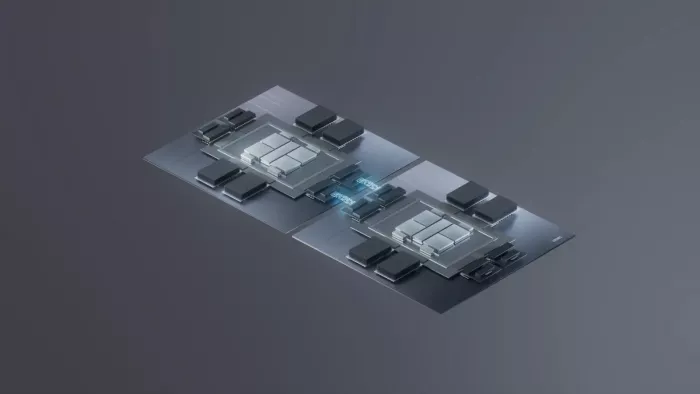
Leveraging modular chiplets, this automotive SoC mock-up highlights a future of adaptable designs that offer customization, scalability, and faster innovation cycles.
Collaborating to shape the new era of mobility
At Bosch, we see chiplet technology not only as technical innovation, but also as a potential breakthrough for software-defined mobility. It unlocks the architectural freedom, performance scalability, and economic viability required to build the intelligent and adaptable vehicles of the future. However, the technology’s full potential can only be reached through open standards and strong collaboration across the automotive and semiconductor industries. By working closely with our partners, we at Bosch believe that we can shape a modular, sovereign, and future-proof compute landscape for mobility.
Related Chiplet
- Interconnect Chiplet
- 12nm EURYTION RFK1 - UCIe SP based Ka-Ku Band Chiplet Transceiver
- Bridglets
- Automotive AI Accelerator
- Direct Chiplet Interface
Related Blogs
- The Chiplet Revolution
- UCIe and Automotive Electronics: Pioneering the Chiplet Revolution
- Silicon Creations is Enabling the Chiplet Revolution
- The Chiplet Revolution
Latest Blogs
- Bosch and the chiplet revolution: Enabling software-defined mobility
- Addressing the Biggest Bottleneck in the AI Semiconductor Ecosystem
- Thermal Management in 3D-IC: Modeling Hotspots, Materials, & Cooling Strategies
- 3D Chips: Socionext Achieves Two Successful Tape-Outs in Just Seven Months
- Intel Foundry Collaborates with Partners to Drive an Open Chiplet Marketplace